Rule of Thirds vs Golden Ratio: What's the Difference in Photography?
Rule of thirds vs golden ratio: how each grid is built, how they differ in practice, and when to use which for better photo composition.

Sharif Khaleel
· 3 min read
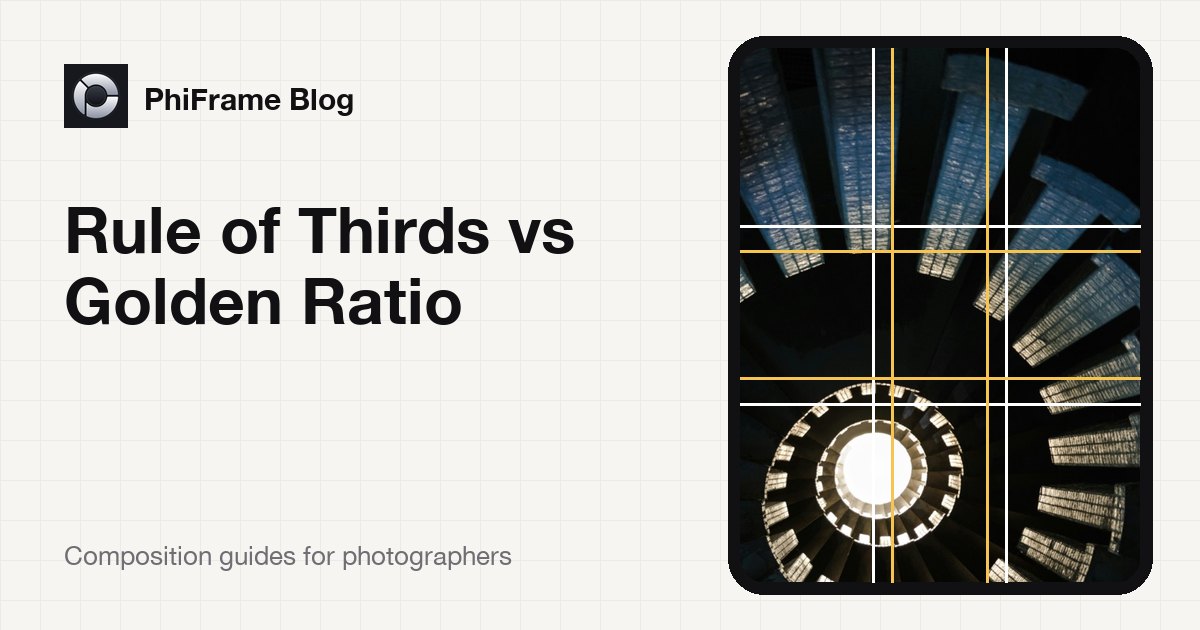
Put a rule of thirds grid next to a golden ratio grid and they look almost identical: two vertical lines, two horizontal lines, four intersections. So why do photographers argue about them, and does the difference actually matter?
It does, a little. And knowing when it matters will make you a more deliberate photographer.
How the rule of thirds is built
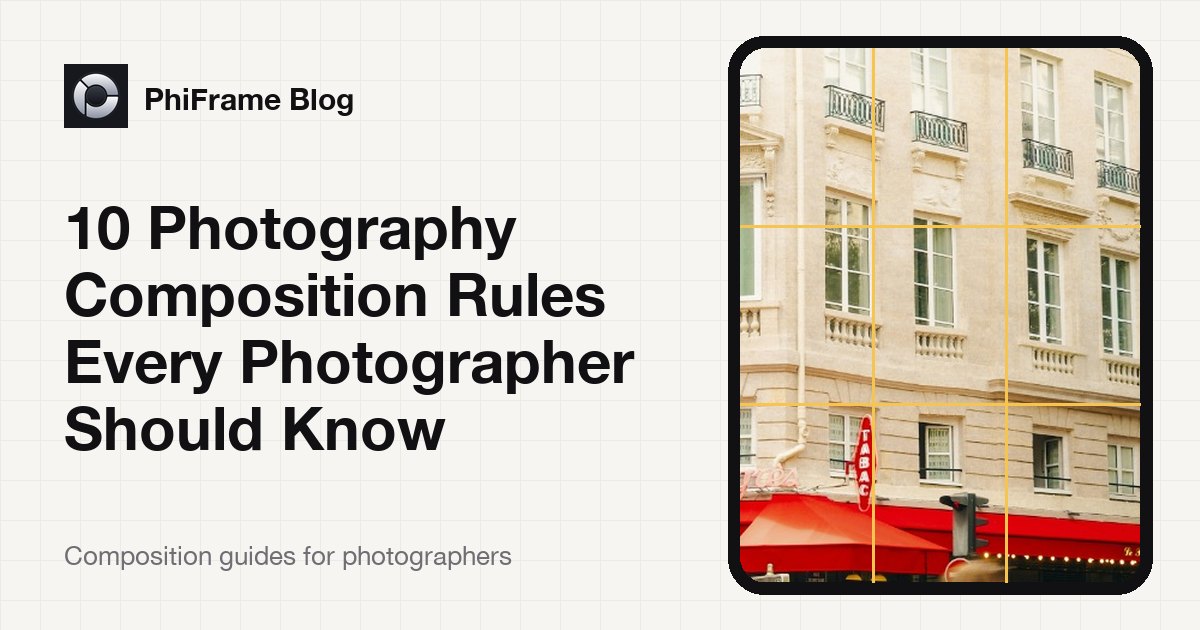
The rule of thirds splits the frame into three equal parts in each direction. The lines sit at exactly 33.3% and 66.7% of the width and height.
It is a simplification popularised in the 18th century as a rule of thumb for painters, and it has become the default grid on almost every camera. Its strength is simplicity: it is easy to remember, easy to see, and it reliably moves your subject away from the centre.
How the golden ratio (phi grid) is built
The golden ratio, φ (phi), is approximately 1.618. Two quantities are in the golden ratio when the ratio of the larger to the smaller equals the ratio of the whole to the larger.
To build a phi grid, you split each side of the frame in the golden ratio from both ends. The lines land at about 38.2% and 61.8%, noticeably closer to the centre than the thirds lines.
| Rule of thirds | Golden ratio (phi grid) | |
|---|---|---|
| Line positions | 33.3% / 66.7% | 38.2% / 61.8% |
| Middle section | 33.3% of the frame | 23.6% of the frame |
| Feel | Clearly off-centre, energetic | Subtle, classical, balanced |
| Best for | Landscapes, street, beginners | Portraits, still life, architecture |
What the difference looks like in practice
Because the phi grid's lines sit closer to the middle, a subject placed on a phi intersection is less obviously off-centre. The image still avoids the static feel of a dead-centre subject, but the composition is quieter.
- Horizons: on the thirds grid, a horizon on the lower line gives two-thirds of the frame to the sky, a strong, deliberate statement. On the phi grid, the split is about 62/38, which feels more natural and less "designed".
- Portraits: placing the eyes on the upper phi line often looks more balanced than the upper thirds line, especially in tighter crops.
- Wide scenes with lots of space: the rule of thirds tends to work better, because the larger side areas give your subject more room to breathe.
So which should you use?
Use both, and let the scene decide.
- Start with the rule of thirds while you are learning. It forces the habit of moving your subject off-centre.
- Switch to the phi grid when a thirds composition feels too pushed to the edge, or when you want a calmer, more classical result.
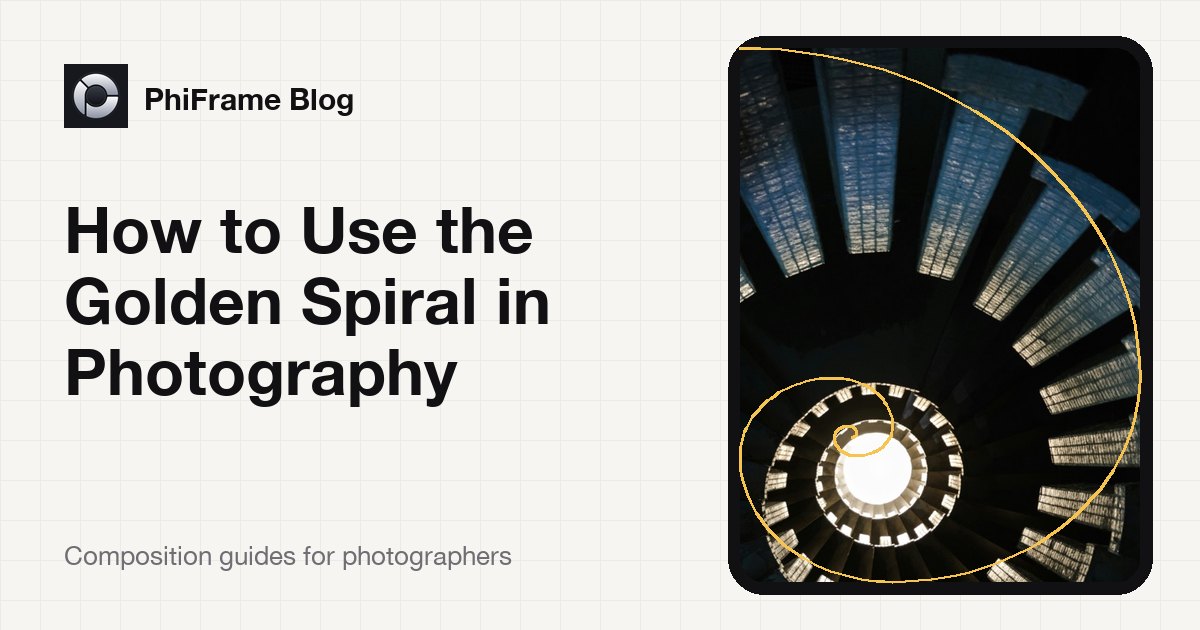
- When the scene has strong curves or a clear focal point, try the golden spiral, which is built on the same ratio.
Neither grid will rescue a dull subject or bad light. But both give you a consistent starting point, and the more you shoot with them, the faster you see good compositions without thinking.
Practise both on the same scene
The best way to understand the difference is to frame the same scene twice, once with each grid, and compare. PhiFrame lets you switch between the rule of thirds and the golden ratio phi grid (as well as the Fibonacci spiral, golden triangles, diagonals and vanishing point) in an instant, drawn live on your iPhone viewfinder. The guides line up pixel-for-pixel with the captured photo, so what you frame is exactly what you get.